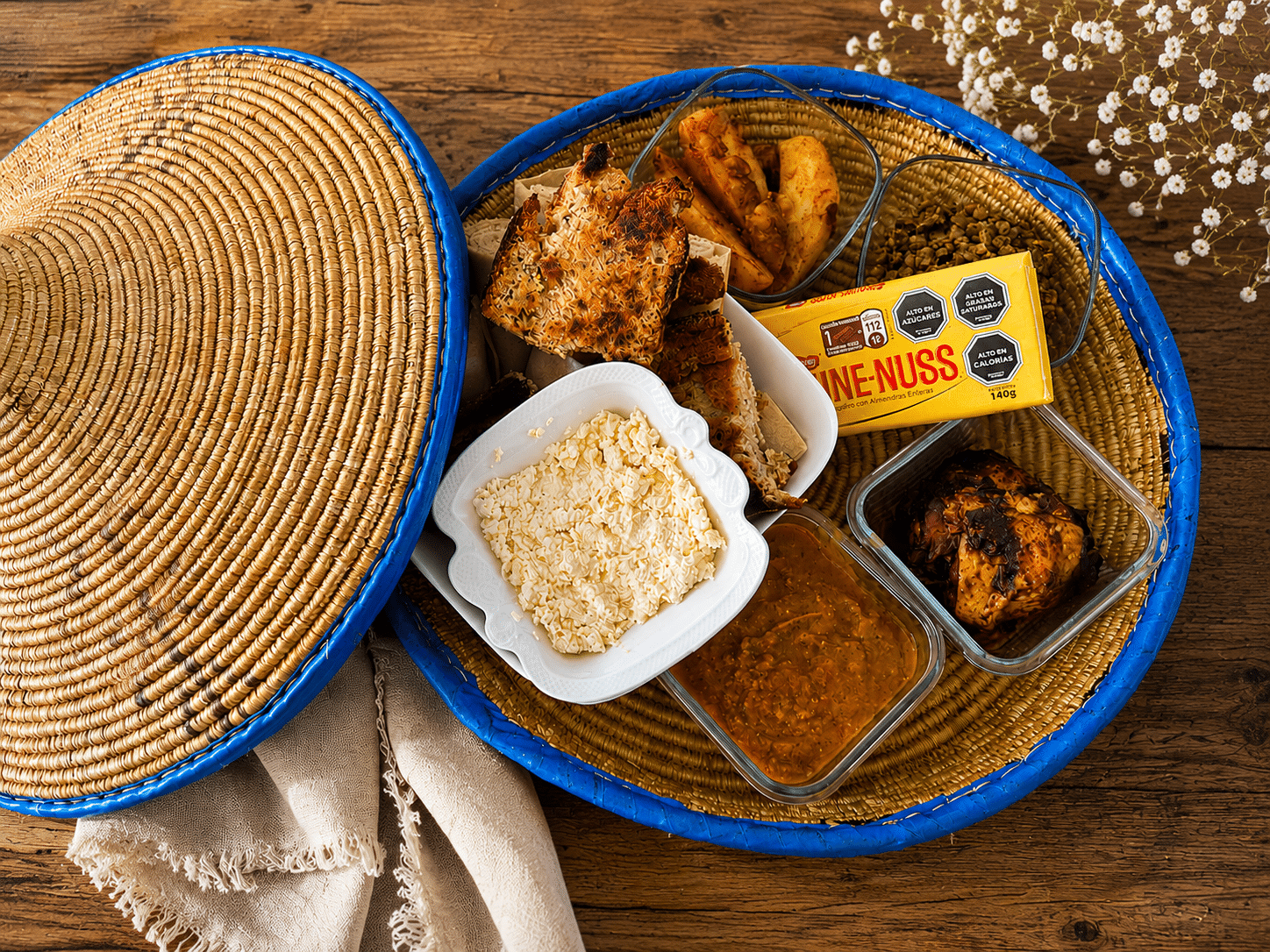
The food I prepared for the mother: when something hot reminds us that we are not alone
This photo was taken in the Netherlands. My friend gave birth, and I remember the shock I felt when I learned that she was going home on the day she gave birth. Not because there is a lack of a system; On the contrary, everything was very organized, modern and incredibly efficient. But precisely within this efficiency I felt that something deep was missing.
A woman who has just given birth is not just a body that has completed a medical operation. She goes through a gate. Her body is open, her mind is open, and life is forever changed. There are moments when a woman needs to be held – not as mercy, but as recognition that she has been through something too big to let her go into alone.
So I made food. Boxes, dishes, something warm and familiar that says without words: you are not alone. Someone sees you. As I stood there, I realized that this small action touches on a much bigger question: Who holds the woman who holds life?
Modernity knows how to release, but not always wrap
The modern world excels at measuring, diagnosing and coordinating. He knows how to shorten hospitalizations, send digital instructions and manage processes with impressive efficiency. All of this is important. Sometimes even a life saver.
But this efficiency does not know how to do the most important thing: it does not know how to sit next to a woman on the first night when she is afraid to fall asleep. She does not know how to recognize the silence in the eyes of a woman who has given birth, but has not yet recovered. She doesn’t know how to bring a hot pot without asking too many questions.
In moving to a more modern and private world, we gained independence, privacy and choice. But along the way, we lost something of the ancient wisdom of the circle – the feminine knowledge that a woman should not go through the great transitions of her life alone.
Birth, pregnancy loss, silent birth or fertility treatments are not just medical or personal events. These are moments when a woman sometimes stands on the brink of an abyss, on the brink of a beginning, or both. And in such moments, she doesn’t always have the strength to reach out and ask for help.
In “A scarred stone”: birth, community and the complexity between women
in the world of “scarred stone”, the moments of birth are not painted as a soft or romantic picture only. They also reveal the complexity of relationships between women, the place where community can envelop – but also the places where silence, a look or distance can burden a woman in her most exposed moments.
Precisely from this complexity arises the deep question of the book and of our lives today: what does a woman need when she crosses a threshold? Who sees her beyond her role – not only as a birther, mother, wife or family member, but as a woman whose body and soul are undergoing a huge change?
The book does not seek to paint the past as an idyll. He reminds us that women are a complex force: they can heal, hold and protect each other, but this power requires a conscious choice. Being there for another woman is not a given; It’s responsibility, it’s sensitivity, and sometimes it’s the difference between loneliness and feeling saved.
Sometimes the greatest support seems very simple: a bowl of food, silence that does not judge, a hand that reaches out in time, or one sentence that gives a woman her breath back: i am here.
How many women around us go through it alone?
Since that day in Holland, I have been thinking about all the women who go through these transitions in silence. Women who experienced pregnancy loss and returned to a world that expected them to “function”. Women who underwent fertility treatments behind walls of silence. Women who hold a baby in their hands and feel that they themselves are falling apart. Women returning to work, replying to messages, smiling, and inside something happens that no one sees.
How many times do we sit next to a woman and not know that she is in the middle of a breakup? How many times does a woman around us go through a miscarriage, loss, anxiety, a shocking birth or deep loneliness – and we don’t know, not because we don’t care, but because our culture has taught us to go through such things alone, in silence, in complete privacy?
There are pains that women have learned to hide because the world doesn’t always know what to do with them. Some losses have no ceremony. There are births that are not followed by enough listening. Some women get flowers, but don’t get the really important question: Who is holding you now?
The power of the circle: we are not the first
There is immense strength in knowing that another woman has been through it before you. that she was afraid, hurt, gave birth, lost, got up, fell apart, and went back to breathing. There is strength in knowing that you are not abnormal, not weak, and not “not coping well”. You are part of a long line of women whose bodies and hearts knew these transitions long before they had modern words.
The female circle is not just for giving advice. Sometimes advice even gets in the way. The power of the circle is knowing that there are those who understand the language even without you having to explain. There are women who can keep you from falling too deep. Being able to tell you: I was there too. I was scared too. I didn’t know how to get through it either. And I came back slowly too.
In a world that requires every woman to be strong, independent, functional and organized, there is something almost revolutionary in saying: I need women around me. This is not a dependency. This is ancient wisdom. It is an understanding that our resilience is not only built from personal strength, but also from a network of hands that hold us when our personal strength is not enough.
What do we want to get back?
We don’t have to give up modernity. We don’t have to give up good medicine, privacy, independence or choice. The question is what of the ancient female wisdom do we want to bring back into our lives today.
Maybe we want to return the food: bring a pot without waiting to be asked. Maybe we want to restore listening: sit with a woman without rushing to correct her. Maybe we want to bring back the language: to create a language sensitive to loss, birth, abortion, fertility treatments, quiet birth and everything in between.
Maybe we want to ask women not only “how’s the baby?”, but also “how are you?”. Not just “have you come back to yourself?”, but “what do you need to come back to you at your own pace?”.
Maybe we want to get the circle back.
Not as a distant ceremony or a nostalgic idea, but as a daily action: a company that brings food to the mother. A neighbor who takes a child from kindergarten. A nurse who reminds you to eat. A friend who doesn’t disappear after two weeks. A community that understands that female transitions are not just private events, but moments where we are all tested in our ability to see each other.
The food was just food. and much more than that
The food I made in the Netherlands was just food. And he was much more than that. It was a memory of women who brought each other life in bowls, hands, words and silence. He was a way of saying: I see you. Your body has worked hard. You don’t have to worry about everything now. Someone is thinking about you.
I see in this picture a question that I want to leave open: how many women would we save from loneliness if we brought this circle back into our lives?
We can’t always prevent the bumps. We cannot always prevent pain, loss, difficult birth, fear or loneliness. But we can make sure that a woman doesn’t stand there alone. We can be the hand that is placed in time, the pot that comes to the door, the message that is sent after everyone has already returned to normal.
Feminine power is not just the power to hold ourselves. It is also the ability to remember to hold each other.
This article is part of the content world of Fentay around women, roots and community.